
You sit down at your computer at 7 p.m. with one goal: finish the project you’ve been putting off all week. Two hours should be plenty of time. But learning how to be so productive it feels illegal starts with recognizing what happens next.
First, you check an email. Then you remember something you need to look up, so you open another tab. Before long, you’re reading an article that has absolutely nothing to do with the project you started.
You look at the clock, and somehow it’s 9:30. You’ve answered messages, researched things you didn’t need, and added three more tasks to tomorrow’s list. Meanwhile, the project you sat down to finish hasn’t moved an inch.
Now imagine that same evening with a different approach. You silence your phone, close the unnecessary tabs, and decide exactly what needs to get done. Ninety minutes later, you’ve made more progress than you did during the entire previous evening.
Same person, same computer, and the same responsibilities. The difference wasn’t motivation or some extraordinary amount of willpower. It was having a system that helped you focus on what mattered.
That’s what people often misunderstand about productivity. They keep trying to push themselves harder when they should be making it easier to concentrate and finish important work. These ten productivity hacks will help you do exactly that without turning your life into an endless to-do list.
1. How to Be So Productive It Feels Illegal Starts With Eliminating Distractions
Here’s something worth looking at: How many times did you pick up your phone yesterday without actually needing it? Maybe you opened Instagram while waiting for something to load or checked one notification that turned into twenty minutes of scrolling.
Those little interruptions don’t seem like much individually. However, they break your concentration and force you to settle back into whatever you were doing. When that happens repeatedly, even a simple project can take far longer than necessary.
Make Your Phone Less Interesting
You don’t need to throw your phone away or delete every app you enjoy. However, you do need to stop giving it unlimited access to your attention.
Start with a few practical changes:
- Turn off notifications that aren’t important.
- Move social media apps off your home screen.
- Put your phone out of reach during focused work.
- Set reasonable limits for recreational scrolling.
- Try grayscale mode to make your screen less appealing.
Additionally, check your phone’s screen time report and look at how often you unlock it. You might discover that your biggest time problem isn’t a lack of hours. It’s how often you interrupt the hours you already have.
Protecting your attention is just as important as managing your schedule. After all, you can’t make meaningful progress when every notification gets to decide what you do next.
2. Stop Writing Goals That Are Too Big to Start
Have you ever looked at your to-do list and felt overwhelmed before doing anything? Maybe it says “grow my business,” “get organized,” or “fix my finances.”
Those sound like goals, but they don’t tell you where to begin. As a result, you can spend more time figuring out what to do than actually doing it.
A large project isn’t the same thing as a task. When you break that project into smaller actions, you remove some of the uncertainty that makes starting difficult.
Turn Every Project Into a Clear Action
Instead of writing vague goals, give yourself something specific to finish.
- Instead of: Work on the website. Try: Update two product descriptions.
- Instead of: Create more content. Try: Write the first 500 words of a blog post.
- Instead of: Improve the business. Try: Contact three potential customers.
- Instead of: Get finances organized. Try: Review last month’s expenses.
Notice how each action has a clear finish line. You know exactly what you’re supposed to do, and you can recognize when you’ve completed it.
Before starting your next work session, ask yourself what you want to have finished when it ends. If you can’t answer that question, break the task down further. Having a clear starting point also helps reduce procrastination because you know exactly what needs to be done.
If putting things off has become a regular problem, our productivity books guide featuring The Now Habit explores why procrastination happens and how to approach it differently.
3. Use Deep Work Blocks Instead of Multitasking
Being busy doesn’t necessarily mean you’re accomplishing anything important. You can spend three hours answering messages, switching between browser tabs, and organizing files without finishing your main task.
Meanwhile, one uninterrupted hour might produce something useful. That’s the value of deep work: giving one demanding task your full attention for a set period.
However, you don’t need three free hours or a private office to make this work. You can adjust focused work sessions to fit your actual schedule.
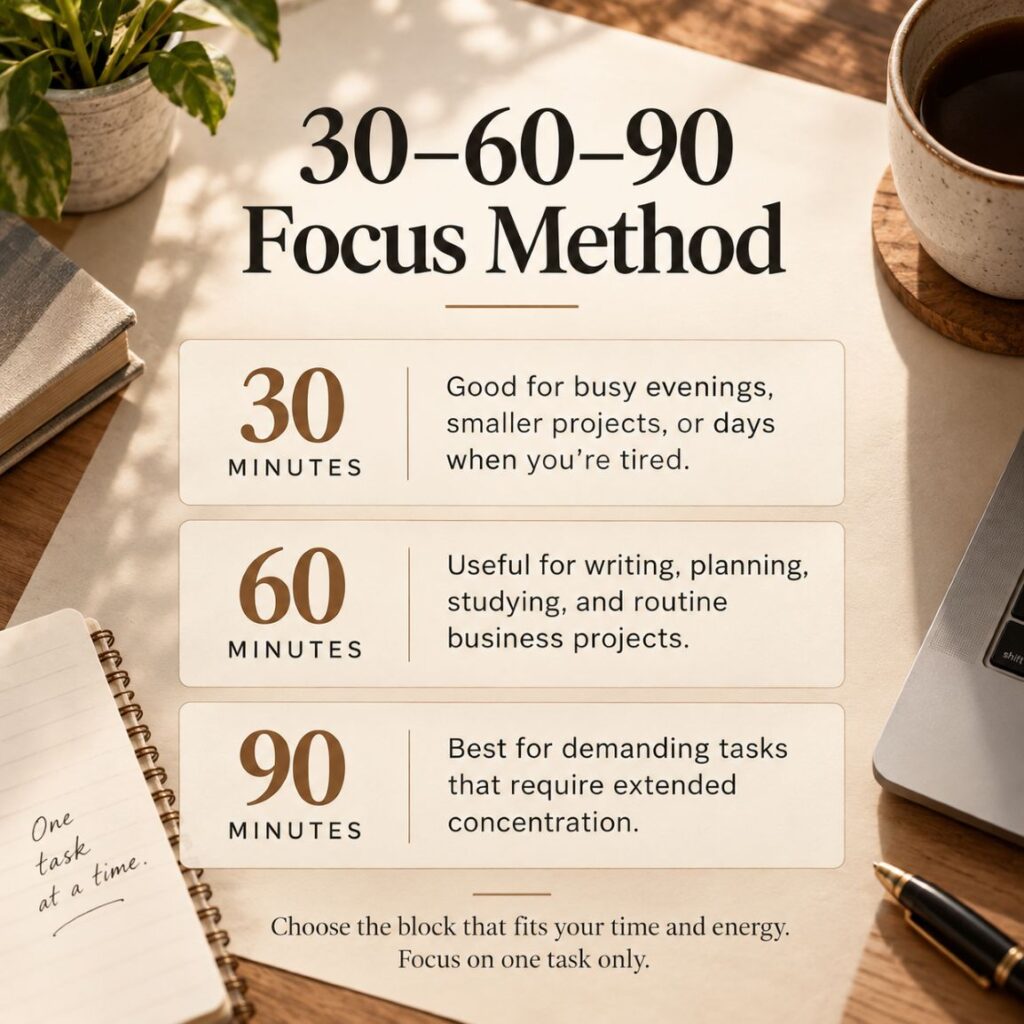
Try the 30–60–90 Focus Method
Choose a work block based on the time and energy you have available.
- 30 minutes: Good for busy evenings, smaller projects, or days when you’re tired.
- 60 minutes: Useful for writing, planning, studying, and routine business projects.
- 90 minutes: Better for demanding tasks that require extended concentration.
Before starting, decide exactly what you want to complete. Then silence unnecessary notifications, close unrelated tabs, and work on that task alone.
When your timer ends, take a short break and evaluate your progress. If you’ve finished, move on. If the task still needs work, decide whether another focused session makes sense.
You don’t have to force yourself through ninety minutes when thirty is all you can realistically manage. Thirty minutes of focused effort can accomplish more than hours spent constantly switching between tasks.
Affiliate disclosure: As an Amazon Associate, I earn from qualifying purchases. This comes at no additional cost to you.
A Book Worth Exploring: Ultraproductive
If you’d like to learn more about building effective focus routines, consider Ultraproductive: The 90-Minute Method to Optimize Focus, Sleep, and Stress by Eric Partaker and Dr. Christian Poensgen.
The book explores how concentrated work, sleep, stress, and daily energy affect performance. Instead of treating productivity as a competition to work the longest, it examines ways to use your available energy more effectively.
It’s particularly relevant if you’re interested in improving your focus without constantly pushing yourself toward exhaustion.
4. Find Your Best Working Hours Instead of Copying Someone Else’s Routine
Some people swear by waking up at 4 a.m. Me, it’s 5:30 a.m., while others do their best thinking after everyone else has gone to bed. Neither schedule automatically makes someone more disciplined or successful.
Yet productivity advice often makes it sound like there’s one perfect routine everyone should follow. In reality, your responsibilities, sleep, and natural energy patterns all affect when you can concentrate.
Instead of copying someone else’s schedule, pay attention to when you’re most alert and use that information to plan your work.
Work With Your Energy, Not Against It
For the next week, notice how your energy changes throughout the day. Ask yourself:
- When do difficult tasks feel easier?
- When can I concentrate without constantly fighting distractions?
- When does my energy usually begin to drop?
- What time can I realistically protect for important work?
Once you identify your strongest available hours, try scheduling your most demanding work during those periods. For example, you might handle planning before work and save easier administrative tasks for the evening.
However, if you’re sharper at night, there’s no reason to force yourself into an early-morning routine that doesn’t fit your life. What matters is finding a schedule you can maintain.
Not everyone controls their working hours, and that’s an important distinction. Still, knowing when you work best can help you make smarter decisions about the time you do control.
Free Tool: Start Your Day With a 5-Minute Morning Reset
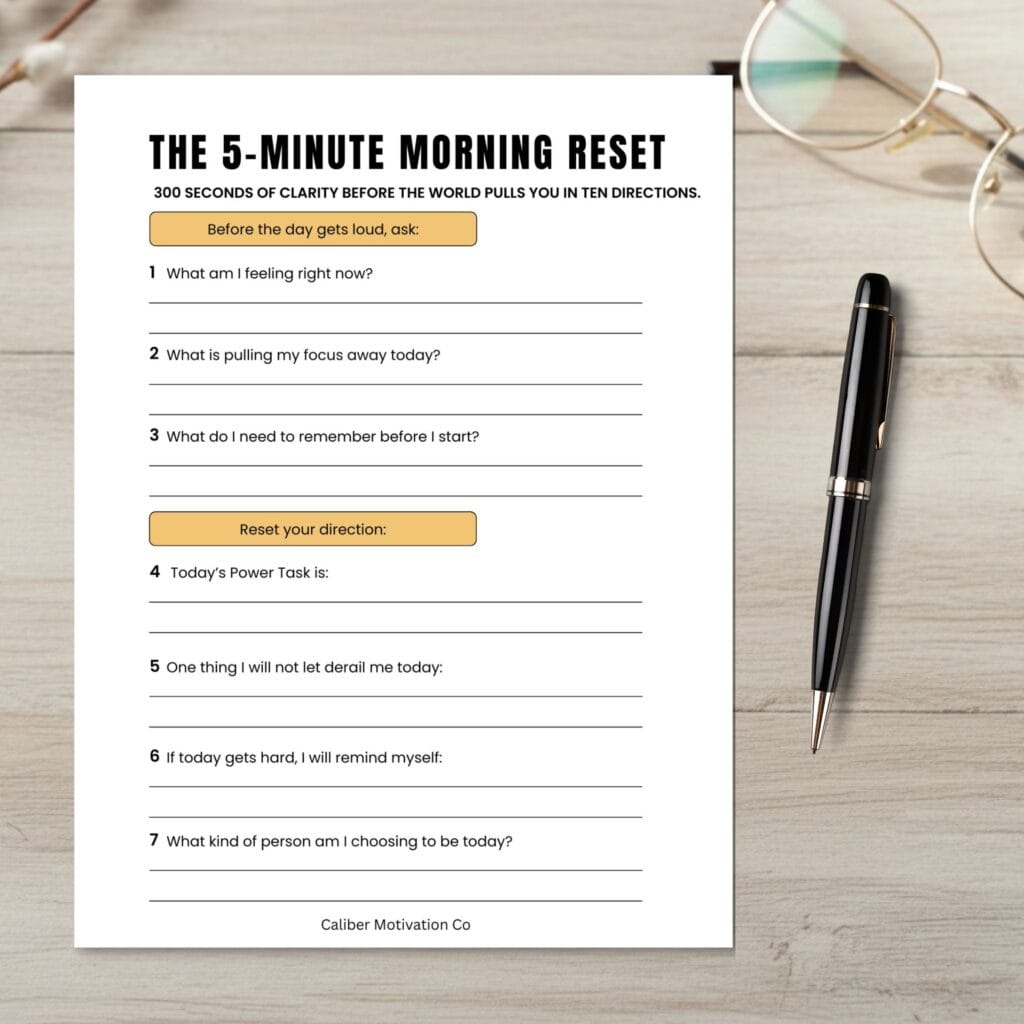
Sometimes, the hardest part of being productive is deciding where to begin. You wake up thinking about everything that needs attention, and before you’ve made a plan, the day is already pulling you in different directions.
That’s why I created the free 5-Minute Morning Reset. It’s a simple tool to help you clear your head, identify your priorities, and begin the day with a little more direction.
You don’t need another complicated morning routine. Instead, you need a few minutes to decide what matters before distractions start competing for your attention.
Ready to start your mornings with more focus and less overwhelm? Get Your Free 5-Minute Morning Reset and start building a routine that works for your life.
5. Build Focus Triggers That Make Starting Easier
Most people already follow routines without thinking about them. You might grab your keys, check your belongings, and lock the door in the same order every morning.
However, when it’s time to work on a personal goal, you might not have any routine at all. You sit down, look around, check your phone, and hope you suddenly feel ready.
Instead of relying on that feeling, create a simple series of actions that signals it’s time to work. Repeating the same steps can make the transition into focused work feel more familiar.
Build a Five-Step Focus Routine
Try following these steps before each important work session:
- Clear unnecessary items from your workspace.
- Put your phone on silent.
- Open the document or project you need.
- Set a timer for your planned work session.
- Begin with the first specific action.
Setting a timer is just one way to make focused work easier. For more practical tools that help you build better habits, check out our 6 Tools to Stay Consistent That Actually Work.
You can also use quiet music or the same workspace if those things help you concentrate. The goal is to cut down on the decisions you have to make before getting started.
However, don’t turn your preparation into another project. If you’re spending twenty minutes getting ready for thirty minutes of work, your routine has become part of the problem.
Preparation should make starting easier, not give you another reason to delay.
6. Use Deadlines to Stop Perfectionism From Stealing Your Time
Have you ever spent an entire evening making tiny adjustments to something that was already good enough? Maybe you kept changing a graphic, rewriting the same paragraph, or rearranging a page that looked fine hours ago.
I’ve caught myself doing this more times than I’d like to admit. When you’re building something you care about, you want every detail to be right. There’s nothing wrong with having high standards, but there’s a point where perfectionism starts working against you.
And that’s where you have to draw the line.
You can spend another three hours making minor changes, but will those changes actually improve the result? Sometimes they will. However, other times you’re simply putting off the moment when you have to call the project finished.
Give Every Task a Reasonable Time Limit
One way to break this cycle is to decide how much time a task deserves before you begin. That doesn’t mean rushing through your work. It means giving yourself a reasonable deadline and sticking to it whenever possible.
For example:
- Thirty minutes to outline an article.
- Forty-five minutes to plan social media content.
- One hour to organize your weekly schedule.
- Ninety minutes to complete a first draft.
Of course, these aren’t strict rules. Some projects require more time, especially when accuracy, finances, or safety are involved.
But here’s where things get interesting.
Parkinson’s Law describes how work tends to expand to fill the time available. Give yourself all weekend to complete a simple project, and you might spend the entire weekend working on it. Give yourself two focused hours, and suddenly you’re forced to decide which details matter most.
The point isn’t to lower your standards. It’s to stop confusing endless adjustments with meaningful improvements.
Set a standard, do the work, review what matters, and know when it’s time to move forward.

7. Plan Your Week Before Everyone Else Plans It for You
Without a plan, your week can turn into one long reaction to everyone else’s priorities. Messages arrive, problems come up, and unexpected responsibilities demand attention. Before you know it, Friday has arrived, and the goals you intended to work on haven’t moved an inch.
Sound familiar?
You can spend an entire week putting out fires and handling everyone else’s needs. Meanwhile, the things that matter to your future keep getting pushed aside.
A weekly plan won’t prevent every interruption, but it’ll give your priorities a place before the week begins. And when something unexpected comes up, you’ll have a better idea of what needs to move and what should stay.
Try Grouping Similar Tasks
One of the easiest ways to work smarter is to give similar tasks their own time. For example, an entrepreneur might organize the week like this:
- Monday: Planning and content creation.
- Tuesday: Customer work and business operations.
- Wednesday: Marketing and outreach.
- Thursday: Writing, editing, and publishing.
- Friday: Financial review and unfinished priorities.
Of course, your schedule might look completely different. Maybe you work long shifts, run a business around family responsibilities, or have days when everything changes at the last minute. That’s fine.
The goal isn’t to follow a perfect schedule. It’s to stop wasting time constantly switching between unrelated activities.
Additionally, try handling smaller tasks in batches instead of scattering them throughout your day. For example, rather than checking messages every ten minutes, set aside a reasonable period to respond. You’ll spend less time jumping between conversations and important work.
And don’t forget about everything that matters outside your business. Family time, meals, personal responsibilities, and rest deserve space on your calendar too.
A productive week should help you manage your responsibilities, not force you to sacrifice everything else that matters.
8. Create a Not-to-Do List
Most people begin their day thinking about everything they need to accomplish. But how often do you stop and consider which activities you need to eliminate?
Sometimes, improving productivity isn’t about adding another habit or finding a new app. It’s about identifying the things that repeatedly waste your time and choosing to stop doing them.
That’s where a not-to-do list can help. It creates boundaries around the activities that pull you away from meaningful work.
Identify Your Biggest Time Wasters
Your list might include:
- Checking social media during focused work.
- Accepting unnecessary commitments.
- Reopening tasks you’ve already finished.
- Saying yes before checking your schedule.
- Spending hours researching instead of acting.
- Constantly switching between unfinished projects.
Be specific about the behavior you want to change. Instead of writing “stop wasting time,” decide not to check social media until you’ve completed your first important task.
That gives you a boundary you can follow. Additionally, it removes the need to make the same decision repeatedly throughout the day.
Every unnecessary commitment takes time from something else. When you recognize that, saying no becomes less about disappointing people and more about protecting your priorities.
You can’t build the future you want while giving every distraction unlimited access to your time.
9. Track Your Progress Instead of Relying on Motivation
Motivation comes and goes. Some mornings, you’re ready to tackle anything. Other days, even the smallest tasks feel like more than you want to deal with.
That’s why tracking your progress matters. When you can see what you’ve accomplished, you have proof that your efforts are adding up, even when you don’t feel particularly motivated.
Want a simple way to keep track? Our 90-Day Habit Tracker helps you monitor daily habits, stay consistent, and see how far you’ve come.
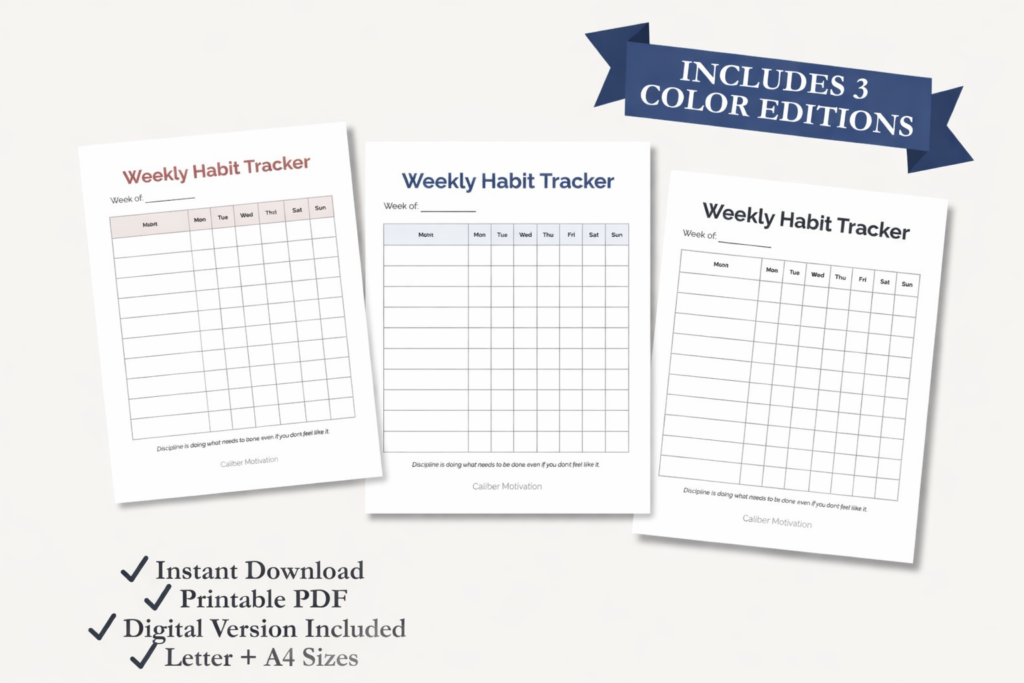
You don’t need an expensive app or a complicated tracking system to make this work. Sometimes, a simple checklist is all it takes.
Make Small Wins Count
Think about the habits you’re trying to build. Instead of measuring success by how motivated you feel, start recording what you actually accomplish.
Here are a few ways to do that:
- Mark each day you complete your main priority.
- Record how many focused work sessions you finish.
- Track the projects you complete each week.
- Review what worked and what slowed you down.
- Set realistic milestones and acknowledge your progress.
Imagine you’re building a website while working a full-time job. Monday evening, you write 500 words. Tuesday, you update a product listing, and on Wednesday, you finally finish a page you’ve been putting off.
None of those accomplishments seems extraordinary on its own. But by the end of the week, you’ve moved your business forward without waiting for the perfect moment to start.
And that’s the point of tracking your progress. Small wins are easy to overlook when you’re focused on everything you haven’t finished.
Of course, there will be days when life gets in the way. Don’t beat yourself up over a missed day or throw away your progress because your streak ended. Look at what happened, adjust your plan if necessary, and get back to it.
Consistency isn’t about never missing a day. It’s about refusing to let one missed day become the reason you stop altogether.
10. Protect Your Energy or Your Productivity Will Eventually Suffer
There’s a difference between being disciplined and running yourself into the ground. Yet too many people treat exhaustion like a personal failure. They believe that if they were tougher or more determined, they could keep pushing no matter how tired they felt.
But your body doesn’t work that way.
You can have the best productivity hacks, a perfectly organized calendar, and a solid plan for the day. However, none of those things will do you much good if you’re constantly running on empty.
I’ve learned that pushing harder isn’t always the answer. Sometimes, the smartest thing you can do is recognize when your energy is running low and make adjustments before exhaustion starts affecting everything else.
Build Recovery Into Your Productivity System
Taking care of yourself doesn’t require an elaborate wellness routine. Start with the basics and build habits that fit your actual life.
- Get enough sleep whenever your circumstances allow.
- Drink water throughout the day.
- Eat regular, balanced meals.
- Take short breaks during demanding work.
- Move your body in ways that fit your health and workload.
- Spend some time away from screens.
Of course, knowing what you should do and finding the time to do it aren’t always the same thing. When you’re balancing work, family, and a business, rest can feel like something you’ll get around to later.
But here’s what matters. You need to recognize the difference between avoiding work and genuinely needing recovery.
If you’ve worked physically all day, another two hours of demanding work might not be your smartest move. Maybe you’ve got enough energy for thirty focused minutes. Or perhaps the best decision is to shut things down, get some sleep, and start fresh tomorrow.
That doesn’t mean you’re giving up on your goals. It means you’re protecting your ability to keep working toward them.
Discipline isn’t about seeing how much exhaustion you can tolerate. It’s about building habits you can sustain long enough to achieve something meaningful.
How to Be So Productive It Feels Illegal Without Burning Yourself Out
Let’s put these productivity hacks into a realistic example. Imagine you work all day and have only one hour available to build your business.
You could spend that hour checking messages, researching ideas, and bouncing between unfinished projects. Or you could give yourself one clear priority and follow a simple plan.
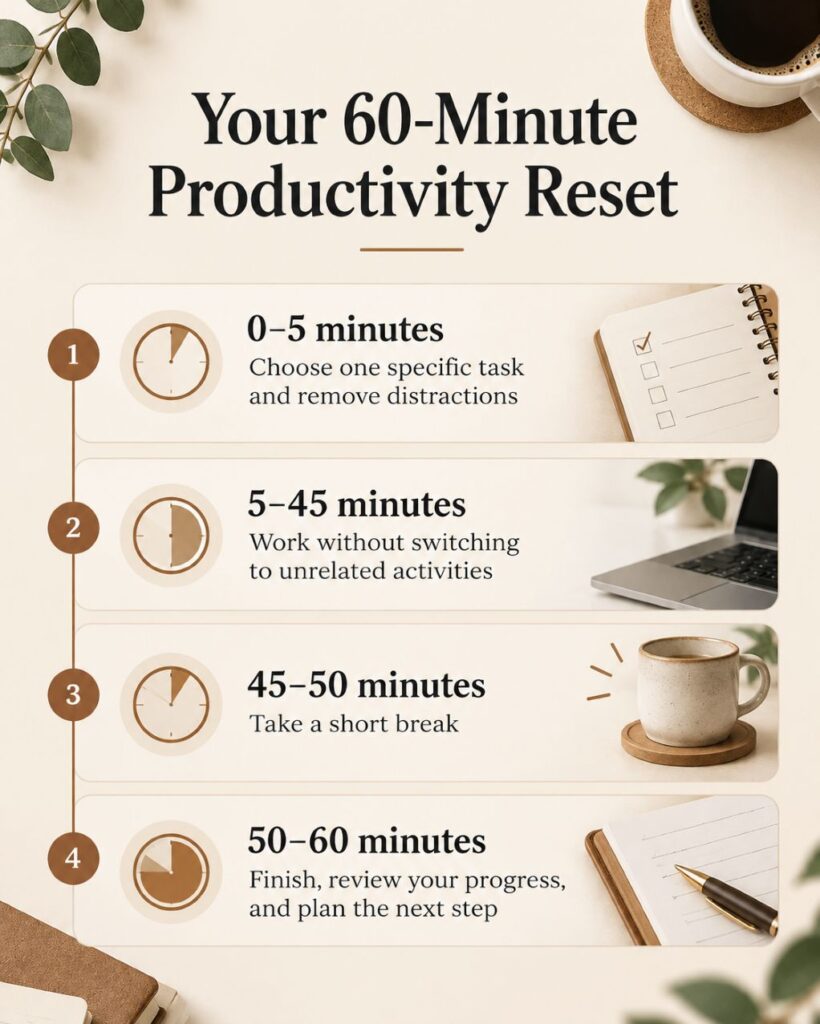
That’s all you need to get started. You don’t need a complicated productivity system or a calendar packed with obligations.
On days when you have more energy, extend your work session. When time is limited, shorten it and concentrate on your most important task. After all, the goal isn’t to turn every available minute into another obligation. It’s to make meaningful progress without constantly fighting yourself.
If you need help organizing your priorities, explore our AI Time Management Prompts for Better Productivity. They can help you build a realistic schedule around the time you have available.
The Real Secret: Productivity Is About Control, Not Speed
Anyone can fill a schedule. You can stay busy from morning until night and still have very little to show for your effort.
The better question is whether the work you completed moved something important forward. Did you finish what you promised yourself you’d do? Did you protect time for your goals instead of spending the entire day reacting to other people?
Those are better measures of productivity than how exhausted you feel at bedtime.
And if you’re juggling more responsibilities than you can comfortably manage, another app probably won’t solve everything. Sometimes, you need fewer commitments, clearer boundaries, and a better way to manage your resources.
That’s why we created the Resource Control System. It helps you identify priorities, protect your focus, and make better decisions about where your time and energy go.
Stop Waiting for Motivation. Start Building a System.
Learning how to be so productive it feels illegal isn’t about discovering one secret trick that changes everything overnight. It’s about knowing what matters and creating conditions that make important work easier to complete.
You remove distractions, define your tasks, protect your energy, and stop measuring success by how busy you look. Additionally, you learn to recognize when focused effort matters more than simply putting in extra hours.
Some days, you’ll accomplish a great deal. Other days, progress will come in smaller pieces. Both count when you’re consistently moving toward something worthwhile.
Building a business, changing your habits, or creating a better future doesn’t happen in one perfect day. It happens through the decisions you make and the work you follow through on over time.
You don’t need to become a productivity machine. You need to become someone who finishes what matters.
If you’re ready to build stronger habits and take greater control of your time, explore the Caliber Motivation Co. Shop.
You’ll find practical planners, journals, and discipline tools designed for people who take their goals seriously. They’re built to help you turn good intentions into consistent action.
Build the structure. Protect your focus. Do the work. Your future depends on what you follow through on today.
Join The Standard
Get practical articles on discipline, mindset, structure, and execution delivered straight to your inbox.
No hype. No fluff. Just real-world strategies to help you stay focused and keep building.
No spam. Unsubscribe anytime.