
You can work hard for years and still feel like you are standing in the same place. Bob Proctor quotes can help explain why that happens. I know what that feels like. You put in the hours, handle your responsibilities, and keep pushing, yet the bigger life you pictured still seems somewhere ahead of you.
Bob Proctor spent decades teaching that effort matters, but effort alone does not change your life. You also have to examine the beliefs, habits, goals, and patterns driving that effort.
These 21 powerful Bob Proctor quotes are not here just to make you feel motivated for five minutes. We are going to look at what they mean, where they apply in real life, and what you can actually do with them to change the patterns shaping your results and build lasting momentum.
Mastering Your Mindset and Paradigm Shifts
Before you can change your results, you have to understand what drives your day-to-day decisions. Bob Proctor taught that our automatic habits—what he called paradigms—shape much of what we do, how we think, and the results we create.
1. “Thoughts become things. If you see it in your mind, you will hold it in your hand.”
This is one of Bob Proctor’s foundational teachings. Everything we build—from a small business to a custom daily habit tracker—starts as a mental concept long before it takes physical shape.
When you keep a clear, intentional image of your destination in mind, you stop drifting and start focusing your daily actions toward that specific outcome.
- Actionable Takeaway: Spend 5 minutes every morning thinking about your main goal. Picture what achieving it looks like, then choose one action that moves you closer to it.
2. “Paradigm shifts are required for permanent change.”
A paradigm is the collection of habits and subconscious beliefs that quietly shape your routine. It explains why you can read dozens of personal development books, know exactly what you should do, and still fall back into the same old patterns.
The problem is not always a lack of knowledge. Sometimes you already know what needs to change. The harder part is replacing the habits and beliefs that keep pulling you back toward familiar behavior.
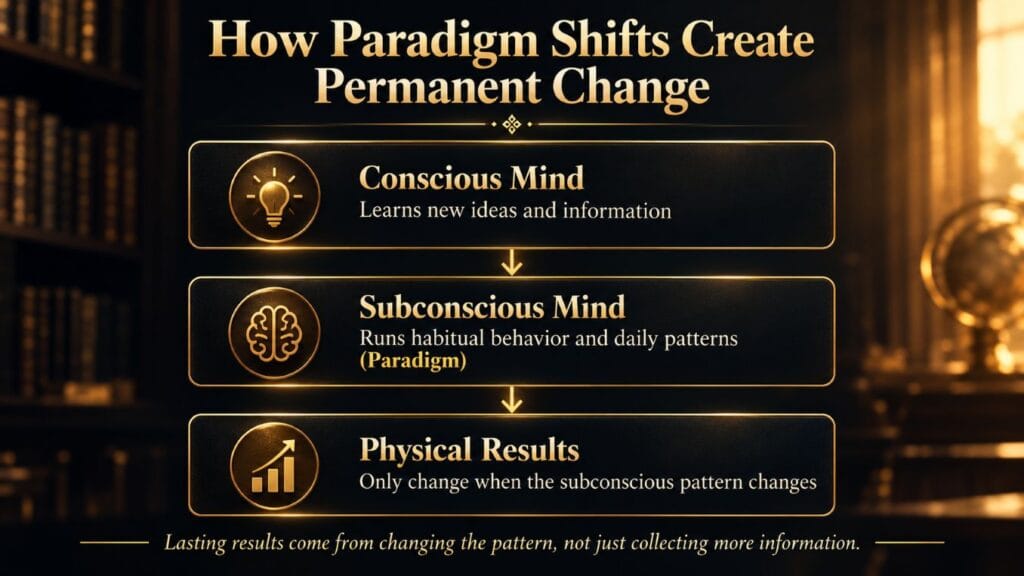
To create lasting change, you have to do more than collect new information. You have to practice a different response often enough that the new behavior starts becoming your normal.
3. “By changing your mind, you change your paradigm, and that changes your life.”
Proctor emphasized that changing your results starts with changing the patterns behind them. You can blame circumstances, timing, or other people, but eventually you have to look at the thoughts and habits guiding your own decisions.
Real change begins when you question old assumptions, choose better thoughts, and build habits that match the person you are trying to become.
4. “Faith and fear both demand you believe in something you cannot see. You choose.”
Proctor taught that faith and fear both ask you to imagine a future that has not happened yet. One pulls your attention toward what could go wrong. The other keeps you focused on what could go right.
- Fear keeps rehearsing failure before it happens.
- Faith helps you picture a better outcome and keep moving toward it.
You cannot control every outcome. However, you can control which possibility gets most of your attention. That choice affects how you think, act, and respond when things get difficult.
5. “The subconscious mind cannot tell the difference between what is real and what is vividly imagined.”
Proctor taught this idea to explain why visualization can influence the way you think and act. When you repeatedly picture yourself handling a situation well, you can become more familiar with that outcome and more prepared to move toward it.
Example: Think about how your heart can race during a suspenseful movie even though you know you are safe on the couch. Your body still reacts to what you are seeing and imagining. Proctor encouraged using visualization in a more intentional way by mentally rehearsing the results and behaviors you want to build.
Setting Big Goals and Taking Bold Action
If your goals don’t demand growth, they aren’t going to pull you out of your comfort zone. Here is how Bob Proctor approached vision, creativity, and setting targets that actually transform you.
6. “Set a goal to achieve something that is so big, so exhilarating that it excites you and scares you at the same time.”
It is easy to set goals you already know you can reach. They feel comfortable because you can see exactly how to get there.
Proctor taught that bigger goals work differently. A strong goal should require you to learn, stretch, and figure things out as you go. If it excites you and makes you a little nervous, that may be a sign you are aiming beyond your current comfort zone.
7. “The only limits in our life are those we impose on ourselves.”
Real limits exist. Money can be tight, time can be limited, and circumstances can make progress harder. However, Proctor taught that the beliefs we accept about ourselves can create another layer of limits on top of those challenges.
When you catch yourself saying, “I don’t have the background for this” or “It’s too late for me to start,” question whether that is a fact or simply a story you have repeated for too long. Changing that story can help you start looking for practical ways forward.
8. “Amateurs compete; experts create.”
When you spend too much time watching what everyone else is doing, it is easy to lose focus on your own work. Proctor’s point was that real progress comes from creating value, not constantly comparing yourself to someone else.
- Competitive mindset: Watching what others are doing and measuring yourself against them.
- Creative mindset: Using your own strengths to build something useful and different.
9. “Change is inevitable, but personal growth is a choice.”
Time keeps moving whether you are ready or not. Life changes, responsibilities grow, and new challenges show up.
Growing as a person takes more intention. You have to keep learning, look honestly at your habits, and make choices that help you become better instead of staying comfortable.
Overcoming Obstacles, Doubt, and Fear
When you’re trying to build something meaningful, setbacks are part of the process. Progress slows down, plans change, and some days test your patience more than others.
Proctor’s teachings come back to the same idea: keep your focus, stay disciplined, and do not let temporary difficulty make the decision for you.
10. “Be like a postage stamp. Stick to it until you get there.”
In an age of instant gratification, persistence remains a rare competitive edge. It is easy to stay committed when progress is obvious. The harder part is continuing when you are doing the work and the results still have not shown up.
Think of a seed planted in the dirt. You cannot see what is happening underground, but that does not mean nothing is happening. Keep showing up, keep doing the work, and give your effort time to build into something visible.
11. “When you react, you give away your power. When you respond, you stay in control.”
Living in constant reaction mode keeps you at the mercy of outside events. Someone cuts you off, or a minor setback occurs, and your entire day gets derailed.
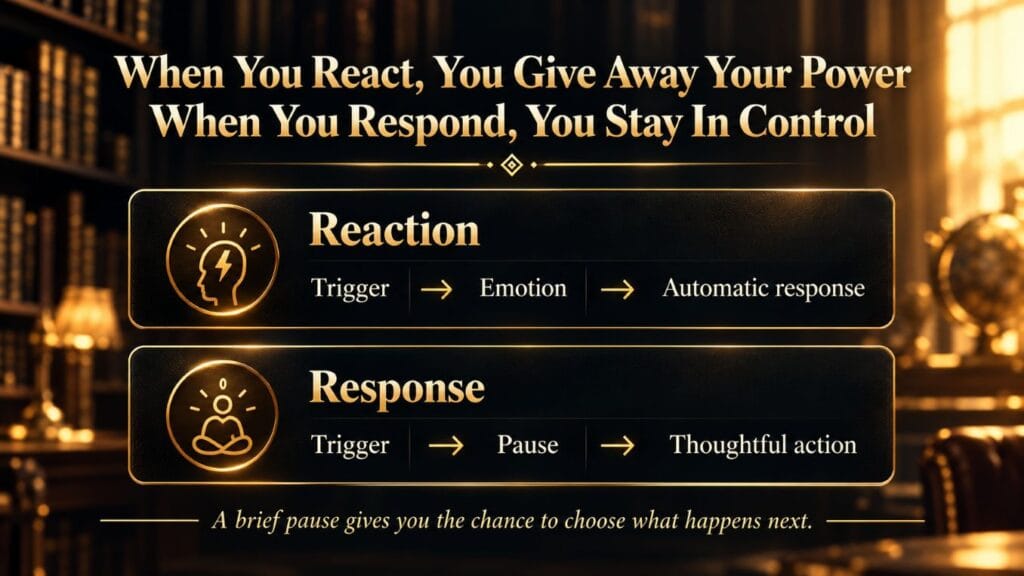
Responding creates a little space between what happened and what you do next.
That pause does not mean ignoring the problem. It means giving yourself enough time to choose what happens next instead of letting the moment choose for you.
12. “Doubt and worry are simply misuse of the imagination.”
Your imagination can help you solve problems, plan ahead, and picture better possibilities. But when you keep replaying everything that could go wrong, that same imagination starts working against you.
Tip: When you catch yourself thinking, “What if this fails?” stop and ask, “What if this works? What is the next step I can take?”
13. “Accountability is the glue that ties commitment to the result.”
Motivation can get you started, but it does not always last. Accountability helps you keep going when the excitement wears off.
- Internal accountability: Track what you said you would do and whether you actually did it.
- External accountability: Check in with someone who expects you to follow through.
Building Wealth, Value, and Abundance
Bob Proctor taught that earning more starts with becoming more valuable. The better you get at solving problems, serving others, and improving your skills, the more earning potential you can create.
14. “The amount of money you earn will always be in direct proportion to the demand for what you do, your ability to do it, and the difficulty in replacing you.”
Proctor called this the Law of Compensation. His point was simple: income is tied to the value of what you do, how well you do it, and how easy it is for someone else to replace you.
If you want to increase your earning potential, improve your skills, become better at solving useful problems, and make yourself harder to replace.
15. “See yourself living in abundance and you will attract it.”
Proctor taught that what you focus on shapes what you notice. If your attention stays locked on debt, struggle, and everything you lack, it can become harder to see opportunities right in front of you.
An abundance mindset does not mean pretending problems do not exist. It means recognizing what you already have while looking for ways to create more value.
- Appreciate the resources you already have.
- Look for opportunities instead of only obstacles.
- Keep improving the value you offer to other people.
16. “Money is only used for two things: to make you comfortable, and to enable you to extend the service you provide.”
Proctor’s point was that money is a tool. It can make life more comfortable, but it can also give you more ways to help other people.
More resources can let you solve bigger problems, support your family, invest in your work, and serve more people. In that sense, money becomes useful when it helps you build a better life and create more value.
17. “Everything you are seeking is seeking you.”
Proctor taught that the opportunities, people, and resources you need may already exist. The challenge is becoming ready enough to recognize them when they show up.
That means building your skills, paying attention, and taking action when the right opportunity appears. You do not have to force everything. However, you do have to be prepared to move when the door opens.
Developing Personal Leadership and Purpose
True success starts with how you lead yourself. The way you manage your time, carry your attitude, and hold your standards shapes the quality of your work and your life.
18. “Our attitude is the environment we carry with us during the day.”
Your attitude follows you into every room. It affects how you speak, how you handle problems, and how other people experience you.
When you bring focus, calm, and a willingness to do the work, it changes the way you respond to challenges and the way others respond to you.
19. “People who are interested do things when it’s convenient. People who are committed do whatever it takes.”
There is a big difference between wanting a result and committing to it.
- Interested people work on the goal when conditions are convenient.
- Committed people keep showing up even when they are tired, busy, or not in the mood.
Commitment does not mean ignoring real limits. It means deciding that temporary discomfort will not automatically knock you off course.
20. “If you do not master your time, time will master you.”
Managing your time really comes down to deciding what matters first. If you do not choose where your time goes, other people, notifications, and small distractions will choose for you.
- Proactive: Put your most important work on the schedule before the day gets away from you.
- Reactive: Spending the day responding to whatever feels urgent in the moment.
21. “Tell me what you want, and I’ll show you how to get it.”
This iconic Bob Proctor quote reflects his core teaching philosophy: Clarity matters. It is hard to build a plan when you are vague about what you really want.
Once you define the result clearly, you can start breaking it into smaller steps and deciding what needs to happen next. The goal may still be difficult, but it becomes something you can work toward instead of just something you wish for.

Want to Go Deeper Into Bob Proctor’s Teachings?
If these Bob Proctor quotes hit home, two of his books are worth reading next.
Born Rich: Maximizing Your Awesome Potential is one of Bob Proctor’s best-known books and a strong starting point if you want to understand his ideas about mindset, self-image, goals, and personal potential. Proctor Gallagher presents it as a practical guide to personal and financial fulfillment, with a focus on using more of the potential you already have.
The Art of Living goes deeper into the way Proctor thought about success, beliefs, personal growth, and living with intention. The book draws from his Matrixx workshop and gives readers a broader look at the principles he taught throughout his career.
If you want to do more than save a few quotes, these two books give you the bigger picture behind the ideas.
How to Put Bob Proctor’s Lessons into Action
Inspiration without execution creates zero tangible results. To turn Bob Proctor’s philosophy into daily momentum, use this simple 3-step system:
- Pick One Anchor Quote: Choose 1 quote from this list that directly hits your biggest current challenge.
- Imprint It Daily: Write that quote down by hand every morning in your journal or daily planner to keep it top of mind.
- Execute One Aligned Step: Ask yourself: “If I truly lived by this principle, what concrete action would I take today?” Go do that task immediately.
If you are ready to take control of your daily habits, build real discipline, and keep your progress organized, check out our printable Habit Trackers and Goal Planners at Caliber Motivation Co. to keep your vision on track every single day.
Join The Standard
Get practical articles on discipline, mindset, structure, and execution delivered straight to your inbox.
No hype. No fluff. Just real-world strategies to help you stay focused and keep building.
No spam. Unsubscribe anytime.