
Learning how to improve focus can feel impossible when your brain is trying to keep up with everything life throws at you.
A while back, I heard the trash truck backing down my road and suddenly realized I’d forgotten to put the trash out the night before. I just stood there watching it drive away.
It wasn’t because I didn’t care. It wasn’t because I was lazy.
My brain was simply full.
At the time, I was landscaping all day, building Caliber Motivation Co. every morning and night, taking care of things around the house, and trying to remember a hundred little responsibilities. Somewhere along the way, something as simple as taking out the trash got lost.
Maybe you’ve had days like that too.
You’ve walked into a room and forgotten why. You’ve picked up your phone only to forget what you were looking for. You’ve reread the same paragraph because your mind was somewhere else entirely.
It can leave you wondering if you’re becoming forgetful or losing your edge.
The good news is that your ability to focus isn’t gone. Sometimes your brain is simply carrying more than it can comfortably hold.
Before we talk about how to improve focus, let’s look at why staying focused has become so difficult in the first place.
Why Staying Focused Feels Harder Than Ever
If you feel like your attention isn’t what it used to be, you’re not imagining it.
Years ago, you could sit down and work on one thing without much interruption. Today, your phone buzzes, emails pile up, social media is always one tap away, and new information never stops coming.
Your brain wasn’t designed to process that much input all day long.
Every notification, unfinished task, and decision competes for your attention. Add poor sleep, stress, and trying to juggle too many things at once, and it’s easy to see why your mind starts feeling scattered.
Researchers have found that constantly switching between tasks makes it harder to concentrate on any one thing. Instead of giving your full attention to one job, your brain keeps shifting gears, using energy every time it changes direction.
The good news is that focus isn’t something you’ve lost forever. Once you understand what’s stealing your attention, you can start building habits that protect it.
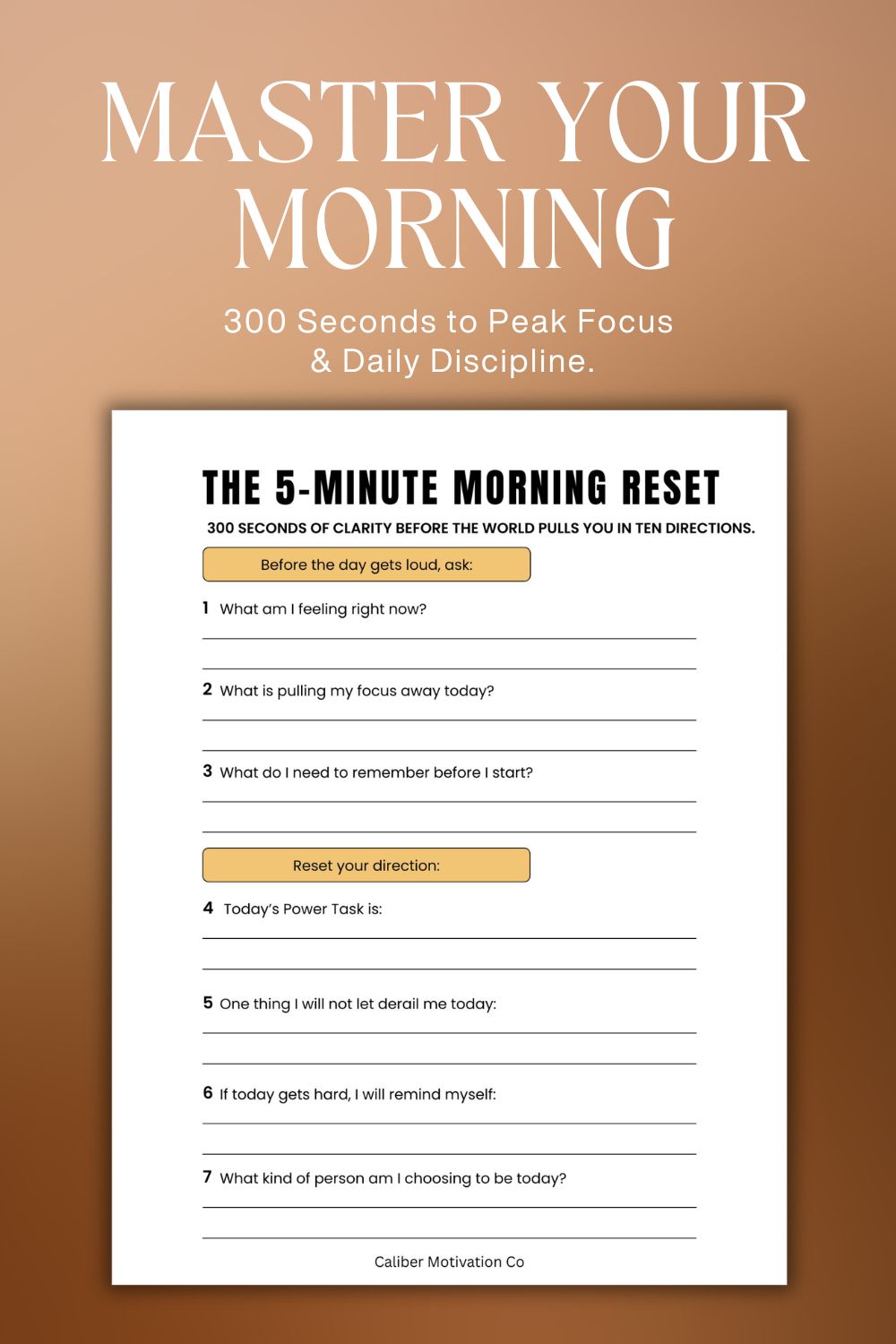
That’s exactly why I created the free 5-Minute Morning Reset. Before I dive into work, it gives me a chance to clear the mental clutter, decide what matters most, and start the day with a little more intention instead of reacting to whatever comes first.
Free 5-Minute Morning Reset
Build stronger discipline, focus, and consistency with the free 5-Minute Morning Reset guide from Caliber Motivation Co. Get new blog posts, mindset strategies, and practical systems for long-term growth delivered straight to your inbox.
5 Practical Ways to Improve Focus Every Day
Understanding why you lose focus is only half the battle. The next step is creating habits that make it easier to protect your attention. None of these changes are complicated, but they’ve helped me stay on track when life feels overwhelming.
1. Remove the Noise
Every notification, text message, and open browser tab competes for your attention. Before starting an important task, silence your phone, close anything you don’t need, and create an environment where your brain has fewer reasons to wander.
2. Stop Trying to Do Everything at Once
Multitasking feels productive, but it usually slows you down. Every time you jump from one task to another, your brain has to refocus. Finish one thing before moving to the next, and you’ll often accomplish more with less mental effort.
3. Break Big Projects Into Small Steps
A long to-do list can feel overwhelming enough to make you avoid it altogether. Instead of focusing on the entire project, ask yourself one question: What’s the very next thing I need to do? One small win builds momentum for the next.
4. Give Your Brain Time to Reset
You can’t expect your mind to stay sharp if you never give it a chance to recover.
I’ve learned that trying to force my way through mental fatigue usually makes things worse. When I’m working on the Caliber website and hit a wall, it’s often better to step away for a few minutes than sit there staring at the screen getting more frustrated.
I’ll load the dishwasher, water my plants, switch a load of laundry, make a quick phone call, or knock out another small chore. None of those things solve the problem, but they give my brain a chance to stop spinning its wheels.
More often than not, I’ll come back, sit down, and see the solution almost immediately. Sometimes all your brain needs is a few minutes away from the problem instead of a few more minutes fighting with it.
5. Get It Out of Your Head
I like to journal because it clears my mental clutter. Instead of trying to remember every task, idea, or responsibility, I write it down. That frees up my attention to focus on what’s right in front of me instead of worrying about what I might forget.
Writing things down also gives your brain permission to let go. Once an idea is on paper, you don’t have to keep replaying it in your head. That mental space can be used for the work that’s actually in front of you instead.
When everything stays in your head, it’s easy to feel overwhelmed before you even begin. Writing things down gives your brain one less thing to carry, making it easier to concentrate on the task that’s right in front of you.
If you’d like to dive deeper into the science and strategies behind building better focus, these are two books I’d recommend.
Disclosure: This post may contain affiliate links. If you purchase through these links, Caliber Motivation Co. may earn a small commission at no extra cost to you.
Master Your Mind: Recommended Reading
- The 5 AM Club: Own Your Morning. Elevate Your Life by Robin Sharma – Learn how to install a morning routine that builds elite-level focus and discipline before the distractions of the day begin.
- Deep Work: Rules for Focused Success in a Distracted World by Cal Newport – The definitive guide on how to stay mentally sharp and produce high-quality results in a world designed to distract you.