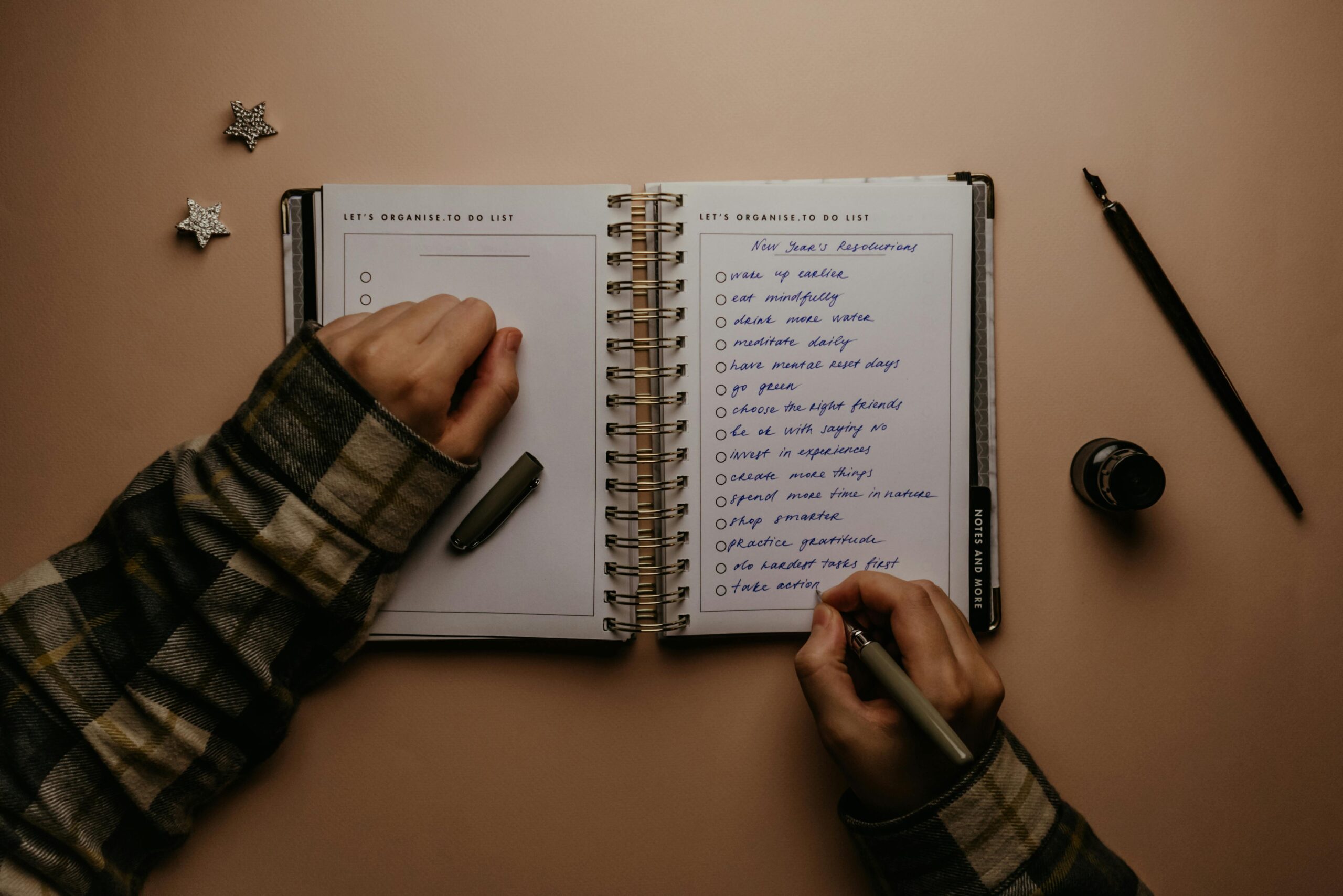
Have you ever reached the end of a long day and wondered where all the time went? Between responsibilities, work, and family, it can feel like you’re always busy but not always moving forward. This is where habit tracking becomes a game-changer, helping you regain control of your schedule and your goals.
I know that feeling well. As a single parent juggling responsibilities and trying to build something meaningful at the same time, there have been many days where simply getting through the day felt like a victory.
Motivation comes and goes. Some days you feel unstoppable, and other days even simple tasks feel like a struggle. I used to think discipline came from those moments of inspiration — but over time I realized something important: motivation fades, but systems create consistency.
That realization is a big part of what I call The Caliber Way: doing what needs to be done even when you don’t feel like it.
Over time I realized that discipline isn’t built through huge life changes. It’s built through the small habits we repeat every day.
Habits shape the direction of our lives one small action at a time. The challenge, however, is staying consistent long enough for those habits to actually make a difference.
The real question is: what habits are shaping your life right now?
If you’ve struggled to stay consistent, you’re not alone. The truth is, changing your habits isn’t about motivation—it’s about having a system. In this post, you’ll learn exactly how habit tracking helps you stay consistent and finally build discipline that lasts.
The Habits That Shape Our Lives

Have you ever noticed how certain habits quietly become part of your daily routine without you even realizing it?
Most of us already have habits shaping our lives — both good and bad.
Some habits move us forward. Others slowly hold us back.
Good habits might include exercising regularly, reading, learning new skills, or consistently working toward something meaningful.
But many of us also fall into patterns that work against us.
Scrolling through our phones longer than we planned.
Procrastinating on something important.
Putting off difficult tasks until “later.”
I’ve had to become very aware of my own habits over the years.
There were times when I realized certain routines — like putting off something challenging or distracting myself with easier tasks — were quietly keeping me from making progress on the things that mattered most.
The truth is that habits compound. Small decisions repeated daily eventually become routines. And those routines shape our results.
As Aristotle once said:
“We are what we repeatedly do. Excellence, then, is not an act but a habit.”
That’s why awareness is the first step.
Before we can build better habits, we have to recognize the ones that are already shaping our lives.
If you’re looking for simple ways to build better habits daily, check out my guide on 10 habits that quietly build discipline over time to start creating momentum.
Combining this with a daily practice like journaling can accelerate your growth.
Why Habit Tracking Works
One of the hardest parts about building discipline is that progress isn’t always obvious at first. You might start a new routine with good intentions, but without a clear way to measure it, it’s easy to lose momentum or forget how far you’ve come.
Habit tracking solves that problem by making your effort visible.
When you track your habits, you create a simple visual record of the choices you make each day. Instead of guessing whether you’re being consistent, you can actually see the pattern forming.
That visibility creates accountability. Each check mark becomes a reminder that you showed up and followed through — even on the days when motivation was low.
Imagine tracking one simple habit for 30 days, like reading ten pages or spending 15 minutes on your business. At first, those checkmarks seem small. However, after a few weeks, you can see exactly where you followed through and where you fell short. That’s when tracking becomes more than a record. It becomes proof of your progress.
Over time, those small marks begin to build momentum. The more consistent the pattern becomes, the more natural the habit starts to feel.
And that’s where discipline begins to take root.
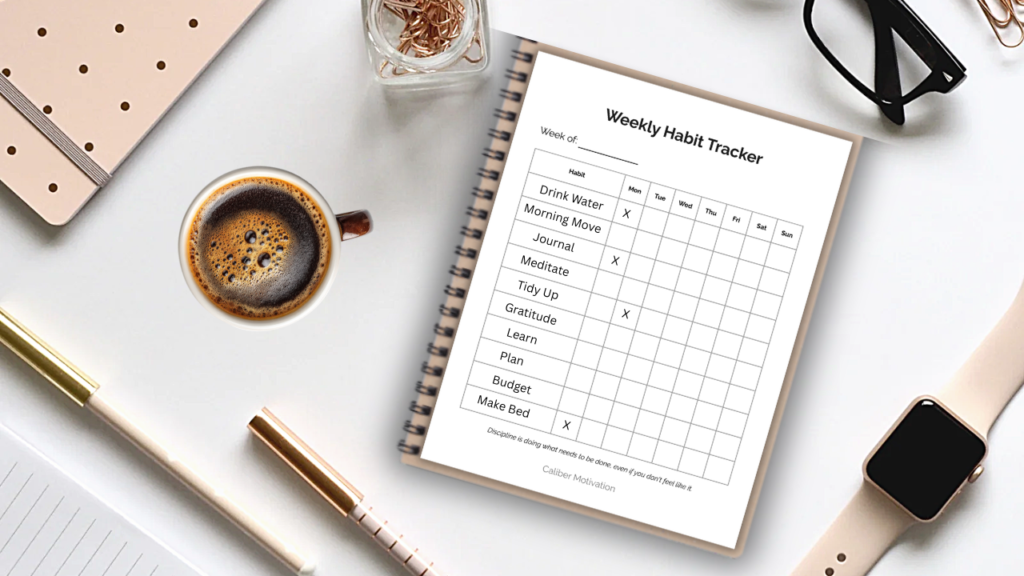
One of the simplest ways to start building consistency is by using a habit tracker. A tracker turns your goals into something visual. Instead of relying on memory or motivation, you have a clear system that shows whether you’re following through each day.
That’s exactly why I created a simple weekly habit tracker designed to help you stay consistent without overcomplicating your routine. Each checkmark gives you a clear picture of your follow-through, helping you recognize what’s working and where you need to improve.
Sometimes the most powerful change comes from something as simple as showing up and marking the next box.
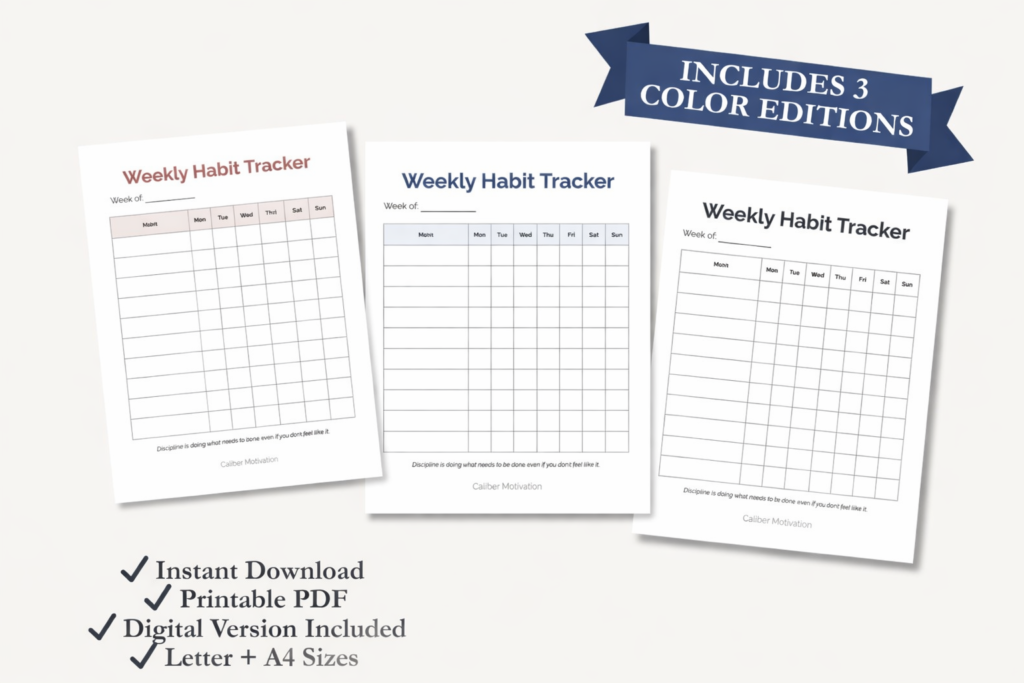
Build discipline one day at a time.
Download the 90-Day Printable or Digital Habit Tracker →
Disclosure: This post may contain affiliate links. If you purchase through these links, Caliber Motivation Co. may earn a small commission at no extra cost to you.
Books That Help You Build Better Habits
If you want to go deeper into the psychology of habits and discipline, these books offer powerful insights on how small actions compound into lasting change. Each one approaches habit building from a slightly different perspective, but they all reinforce the same principle: consistency matters more than motivation.
1. The Power of Habit by Charles Duhigg
The Power of Habit explores the science behind why habits form and how they can be changed. Charles Duhigg explains the habit loop — cue, routine, and reward — and how understanding this cycle can help you replace unhelpful habits with better ones.
View The Power of Habits on Amazon →
2. Tiny Habits by BJ Fogg
Tiny Habits focuses on starting extremely small habits that are easy to maintain. By beginning with simple actions and building consistency first, larger changes naturally follow over time.
3. Good Habits, Bad Habits by Wendy Wood
Good Habits, Bad Habits explains the psychology behind why habits form and why they can be difficult to change. Wendy Wood shows how our environment influences behavior and how small adjustments can make good habits easier to stick with.
View Good Habits Bad Habits on Amazon →
Three books, three different approaches to building better habits. Duhigg helps you understand why habits form. Fogg shows you how to start small, while Wood explains why your surroundings matter more than you think.
However, reading about habits won’t change anything unless you put those lessons to work. Choose the approach that fits your biggest struggle and start there.
If you’re interested in more books that focus on discipline and personal growth, you may also enjoy our list of books that build discipline.
Building Better Habits Starts With Consistency
Habits are not built through motivation alone. They are built through repeated action. The most effective way to stay consistent is to make your progress visible. When you track your habits, you create a simple system that shows whether you’re following through each day. Over time, those small daily actions compound into real change.
Whether you use a habit tracker, learn from great books, or build small routines that fit your lifestyle, the key is the same: show up, stay consistent, and keep moving forward.
If you’re ready to turn what you’ve learned into daily action, explore the planners, habit trackers, and practical tools in the Caliber Motivation Co. Shop. Find something that supports your goals and put it to work.
Join The Standard
Get practical articles on discipline, mindset, structure, and execution delivered straight to your inbox.
No hype. No fluff. Just real-world strategies to help you stay focused and keep building.
No spam. Unsubscribe anytime.