
I used to think adulthood began on your eighteenth birthday. Then I realized birthdays don’t teach you how to budget, cook dinner, schedule a doctor’s appointment, or solve problems when no one is around to help. Mastering essential life skills for teens comes from intentional daily practice, not just turning a year older.
Turning 18 legally makes someone an adult, but readiness doesn’t automatically happen when the clock strikes midnight. True independence is built long before that date through the daily habits, practical decisions, and core capabilities you develop when no one is forcing you to.
- Why Life Skills for Teens Matter
- The 12 Life Skills at a Glance
- What Schools Often Don't Teach
- Financial Skills
- Home Management Skills
- Health & Safety Skills
- Independence Skills
- How Many of These Life Skills Have You Mastered?
- Frequently Asked Questions About Life Skills for Teens
- Build the Habits That Make Independence Possible
Why Life Skills for Teens Matter
Learning practical life skills isn’t about checking off chores—it’s about earning control over your own life. When you know how to handle your own business, you build genuine self-confidence and significantly reduce the daily anxiety that comes from feeling unprepared.
Research from the National Endowment for Financial Education (NEFE) shows that many young adults begin adulthood with limited financial knowledge and little real-world experience managing money. That gap isn’t a lack of intelligence—it’s a lack of practical exposure. Mastering real-world habits early gives teens a massive head start in confidence, job readiness, financial security, and personal independence.
What You’ll Learn
By the end of this guide, you’ll have practical steps you can begin using today—whether you’re preparing for your first job, moving out, or simply becoming more independent:
- How to take full control of your personal finances and career prep
- The foundational habits required to manage a home efficiently
- How to handle your own healthcare, stress, and emergency situations
- Strategies for navigating daily logistics and solving problems independently
- Where you currently stand using an interactive 12-point self-assessment
The 12 Life Skills at a Glance
| Category | What You’ll Learn |
|---|---|
| Financial | Create a budget, understand banking, communicate professionally, prepare for job interviews |
| Home Management | Cook simple meals, do laundry correctly, keep your living space clean |
| Health & Safety | Manage healthcare, respond to emergencies, handle stress respectfully |
| Independence | Navigate transportation, understand basic vehicle care, solve everyday problems |
What Schools Often Don’t Teach
Most schools do a phenomenal job teaching academic subjects, critical thinking, and theoretical concepts. However, many teens still graduate without ever learning how to read a pay stub, schedule a doctor’s appointment, audit an apartment lease, or troubleshoot a household emergency.
These practical skills don’t replace academic education—they complement it. Learning both creates a well-rounded individual who isn’t just smart on paper, but capable in practice. Developing this practical competence is a major part of learning the true power of self-discipline in daily life. The responsibility of bridging that gap falls on us: through personal initiative, home practice, and real-world execution.
Financial Skills
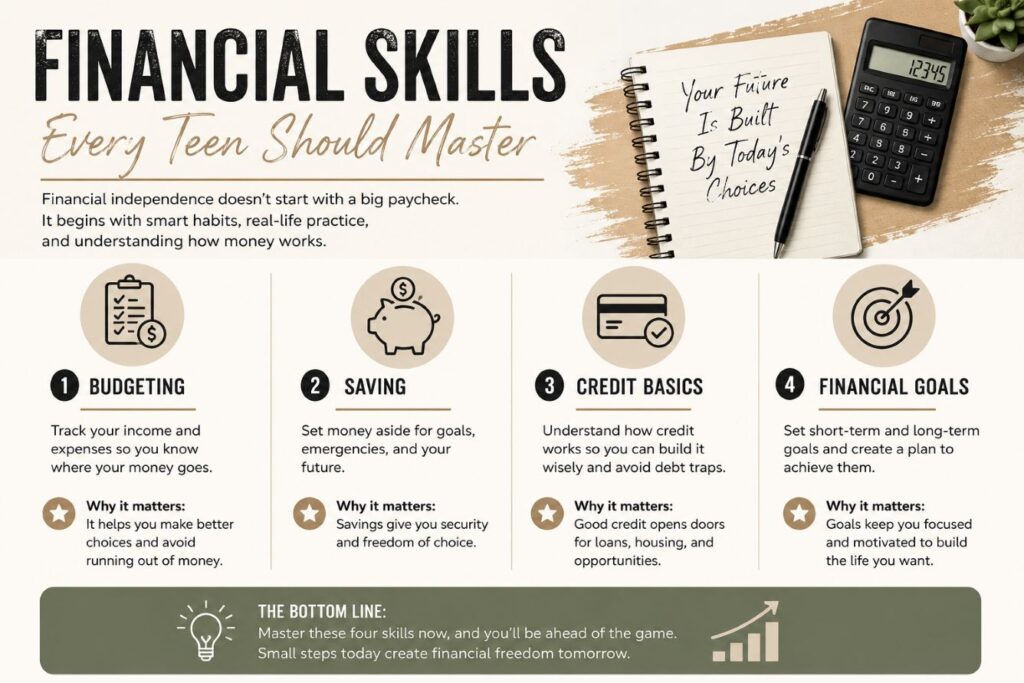
Financial independence doesn’t begin when you get your first full-time paycheck. It begins the first time you learn to manage the money you already have. These four skills will help you build a strong financial foundation.
Affiliate Disclosure: Some links in this article may be affiliate links. If you make a purchase through them, Caliber Motivation Co. may earn a small commission at no additional cost to you. We only recommend products and resources we believe are genuinely helpful.
1. Manage a Basic Budget
- ✅ Why This Skill Matters: Money gives you options, but only if you manage it consciously. Without a budget, income disappears into small, impulse purchases, leaving you tight on cash when real expenses arrive. Budgeting isn’t about restricting your freedom—it’s about telling your money where to go instead of wondering where it went.
- 🛠️ How to Get Started: Write down how much money you receive each month. Next, subtract your fixed expenses, move 20% into savings first, and use what’s left for everyday spending.
- Real Dollar Example
- Monthly Income: $500
- Gas: -$80
- Cell Phone: -$35
- Savings (20%): -$100
- Money Left to Spend: $285
- Real Dollar Example
- ⚠️ Common Mistakes: Treating savings as “whatever is left over” at the end of the month, ignoring small $5 daily purchases, and failing to track cash or digital app transactions.
- 📌 Try This This Week: Open a note on your phone and track every single dollar you spend for the next 7 consecutive days.
- 📚 Helpful Resource: Use the free EveryDollar Budgeting App to track your spending, explore Khan Academy’s Personal Finance Course to learn budgeting and money management, or read Dave Ramsey’s The Total Money Makeover.
2. Understand Banking, Bills & Credit
- ✅ Why This Skill Matters: Navigating financial institutions safely prevents costly interest charges, surprise overdraft fees, and low credit scores. Understanding the difference between checking, savings, debit, and credit forms the foundation of modern adult life.
- 🛠️ How to Get Started: Understand that a checking account is for daily operational transactions using a debit card (spending your actual cash). A savings account is an emergency vault. A credit card is borrowed money that should be paid in full every single month to build credit without accumulating high interest.
- ⚠️ Common Mistakes: Treating a debit card like an endless balance, paying only the “minimum due” on credit statements, and neglecting to review monthly bank statements for fraud or subscription charges.
- 📌 Try This This Week: Log into your bank portal with a parent or mentor and audit your last 30 days of transactions line-by-line.
- 📚 Helpful Resource: Check your bank’s mobile app education tab or read Consumer.gov’s “Your Credit History Explained“ guide.

3. Communicate Professionally
- ✅ Why This Skill Matters: How you speak and write directly impacts how serious people take you. Text-speak, vague messages, and poor phone etiquette can cost teens job opportunities, academic support, and professional respect.
- 🛠️ How to Get Started: How to Get Started: Learn the basic structure of professional emails, phone calls, and written applications. Keep your message clear, polite, and easy to understand.
- Professional Email Example:
- Subject: Inquiry Regarding Part-Time Position — [Your Name]
- Greeting: Dear Mr. Davis,
- Body: I am writing to follow up on my recent application for the sales associate position. I remain very interested in the role and would welcome the opportunity to discuss how my schedule aligns with your team’s needs.
- Sign-off:
Thank you for your time,
[Your Name]
[Your Phone Number]
- Professional Email Example:
- ⚠️ Common Mistakes: Using slang or abbreviations (
u,r,thx) in formal messages, leaving unprofessional voicemail greetings on your phone, and forgetting to include clear subject lines. - 📌 Try This This Week: Draft a formal email requesting information from a teacher, employer, or local business, and review it before sending.
- 📚 Helpful Resource: Read Dale Carnegie’s classic guide How to Win Friends and Influence People or review Purdue OWL’s professional email examples to learn proper email formatting and etiquette.
4. Handle a Job Interview
- ✅ Why This Skill Matters: Interviewing is a learned skill. Knowing how to present your strengths, maintain confident body language, and answer tough questions effectively opens doors in the workforce for teens.
- 🛠️ How to Get Started: Prepare answers for standard interview questions using concrete examples. Arrive 10 minutes early, wear clean attire one step above the job’s daily dress code, make eye contact, and give a firm handshake or confident greeting.
- Core Questions to Prepare:
- “Tell me about a time you had to deal with a difficult situation.”
- “Why do you want to work for this company specifically?”
- “What are your greatest strengths and current weaknesses?”
- Core Questions to Prepare:
- ⚠️ Common Mistakes: Arriving late, slouching, checking your phone during the interview, and answering questions with simple “yes” or “no” responses instead of explaining your thought process.
- 📌 Try This This Week: Practice answering the three core interview questions aloud in front of a mirror or record yourself on your phone.
- 📚 Helpful Resource: Explore Indeed Career Advice’s interview guides for common questions, preparation tips, and sample answers.
Financial Category Takeaway: Financial independence doesn’t begin with your first full-time job. It begins the first time you make thoughtful decisions with your own money.
Home Management Skills
Managing a home is about creating order and efficiency so your living environment supports your goals rather than draining your energy. These three skills ensure teens can take care of their personal space independently.

5. Cook Five Simple Meals
- ✅ Why This Skill Matters: Relying heavily on takeout and convenience foods can quickly become expensive and makes it harder to build healthy eating habits. Knowing how to prepare five basic, inexpensive meals ensures teens can nourish themselves affordably anywhere.
- 🛠️ How to Get Started: Build a foundational repertoire of simple recipes that share versatile ingredients.
- The Essential Five Meals:
- Scrambled or Fried Eggs with whole-wheat toast
- Sheet-Pan Baked Chicken with roasted veggies
- Ground Turkey or Beef Tacos / Burrito Bowls
- Classic Pasta with garlic, veggies, and marinara
- Homemade Vegetable & Bean Chili
- The Essential Five Meals:
- ⚠️ Common Mistakes: Leaving heat on high and burning food, ignoring basic kitchen hygiene (like washing hands after handling raw meat), and neglecting basic meal prep planning before grocery shopping.
- 📌 Try This This Week: Pick one night this week to cook a complete dinner for yourself or your family from scratch without assistance.
- 📚 Helpful Resource: Search budget-friendly meal ideas on Budget Bytes or explore nutrition guides on MyPlate.gov.
6. Do Laundry & Take Care of Clothing
- ✅ Why This Skill Matters: Damaging clothes through shrunk fabrics, color bleeding, or set-in stains is an unnecessary expense. Proper clothing care keeps teens looking sharp and extends the life of their garments.
- 🛠️ How to Get Started: Sort clothes into lights, darks, and heavy towels/bedding. Read the care tag symbols inside your shirts (cold wash vs. warm wash; tumble dry vs. hang dry). Use the correct detergent dosage—more soap does not mean cleaner clothes.
- ⚠️ Common Mistakes: Leaving wet clothes in the washer overnight until they smell musty, drying delicate items on high heat, and leaving clothes in laundry baskets for days until they require re-washing.
- 📌 Try This This Week: Wash, dry, fold, and put away one complete load of your own laundry independently.
- 📚 Helpful Resource: Read Josh Burnette & Pete Hardesty’s book The Teen’s Guide to Adulting or check clothing care symbol charts online.
7. Keep Your Living Space Clean
- ✅ Why This Skill Matters: Physical clutter creates mental chaos. Keeping a living space clean isn’t about perfection—it’s about hygiene, focus, and taking pride in your environment. Building simple cleaning habits can also help you develop discipline over time.
- 🛠️ How to Get Started: Establish daily reset habits combined with a simple weekly deep-clean schedule.
- Simple Weekly Cleaning Checklist:
- Daily: Make bed, clear clutter off desk/counters, sink reset (no overnight dishes).
- Weekly: Vacuum/sweep floors, wipe down bathroom surfaces, change bed linens, empty all trash cans.
- Simple Weekly Cleaning Checklist:
- ⚠️ Common Mistakes: Waiting until a room is a disaster zone before cleaning, letting dirty dishes pile up in bedrooms, and using the wrong cleaning products on delicate surfaces.
- 📌 Try This This Week: Perform a 15-minute “nightly reset” where you put away every item in your room before going to bed.
- 📚 Helpful Resource: Read James Clear’s Atomic Habits or use basic habit-tracking tools to build daily routines.
Home Management Category Takeaway: Taking care of your living space isn’t about pleasing anyone else—it’s about building the self-respect and environment you need to thrive.
Health & Safety Skills
Your health, safety, and emotional well-being are your responsibility. Learning to navigate medical systems, handle sudden emergencies, and process stress effectively protects your long-term future.

8. Manage Your Own Healthcare
- ✅ Why This Skill Matters: As young adults transition out of high school, no one calls to schedule annual checkups or manage prescriptions. Taking responsibility for medical care prevents minor health issues from escalating into major problems.
- 🛠️ How to Get Started: Keep a digital copy of your insurance card on your phone, know your personal medical history/allergies, and learn how to call a clinical receptionist directly.
- Doctor Appointment Script:
- “Hi, my name is [Your Name], date of birth [DOB].
- I am a current patient and would like to schedule a routine annual checkup with [Doctor Name] for next month.
- What availability do you have on weekday afternoons?”
- Doctor Appointment Script:
- ⚠️ Common Mistakes: Expecting parents to schedule appointments after age 18, losing track of prescription refills until you are out of medicine, and ignoring recurring physical pain.
- 📌 Try This This Week: Practice scheduling your next dental, haircut, or medical checkup appointment yourself.
- 📚 Helpful Resource: Explore health and wellness information on the CDC Adolescent and School Health page or use your health provider’s patient portal app.
9. Handle Basic Emergencies
- ✅ Why This Skill Matters: Emergencies demand quick, decisive action. When panic sets in, knowing basic safety protocols keeps teens and those around them safe.
- 🛠️ How to Get Started: Memorize basic first-aid steps for minor burns and cuts. Know where the main water shut-off valve is in your house, how to use a fire extinguisher (PASS: Pull, Aim, Squeeze, Sweep), and keep essential emergency numbers saved in your phone.
- ⚠️ Common Mistakes: Using water on a grease fire (never do this—use baking soda or a fire extinguisher), panicking instead of calling 911 during genuine medical crises, and failing to keep a basic flashlight/first-aid kit at home.
- 📌 Try This This Week: Locate the main circuit breaker box and main water shut-off valve in your home so you know where they are in an emergency.
- 📚 Helpful Resource: Download the official American Red Cross First Aid app to learn basic first aid skills and how to respond confidently in common emergencies.
10. Manage Stress & Communicate Respectfully
- ✅ Why This Skill Matters: Life will throw frustration, deadlines, and disagreements at teens constantly. Learning to process emotions productively is a key part of understanding how to practice choosing yourself daily and building mental strength.
- 🛠️ How to Get Started: Practice emotional regulation using the “Pause Rule.” When feeling triggered, take three deep breaths before responding. Use “I” statements during disagreements (“I feel frustrated when communication drops” instead of “You never tell me anything”).
- ⚠️ Common Mistakes: Venting online or via passive-aggressive text messages, bottling up stress until you explode, and reacting impulsively while emotional.
- 📌 Try This This Week: The next time you feel annoyed or stressed, write down your thoughts on paper for 5 minutes before speaking or taking action.
- 📚 Helpful Resource: Read Sean Covey’s book The 7 Habits of Highly Effective Teens or explore KidsHealth for Teens for practical guidance on stress, emotions, healthy relationships, and mental wellness.
Health & Safety Category Takeaway: Health and emotional resilience aren’t things that just happen to you; they’re daily habits you manage actively.
Independence Skills
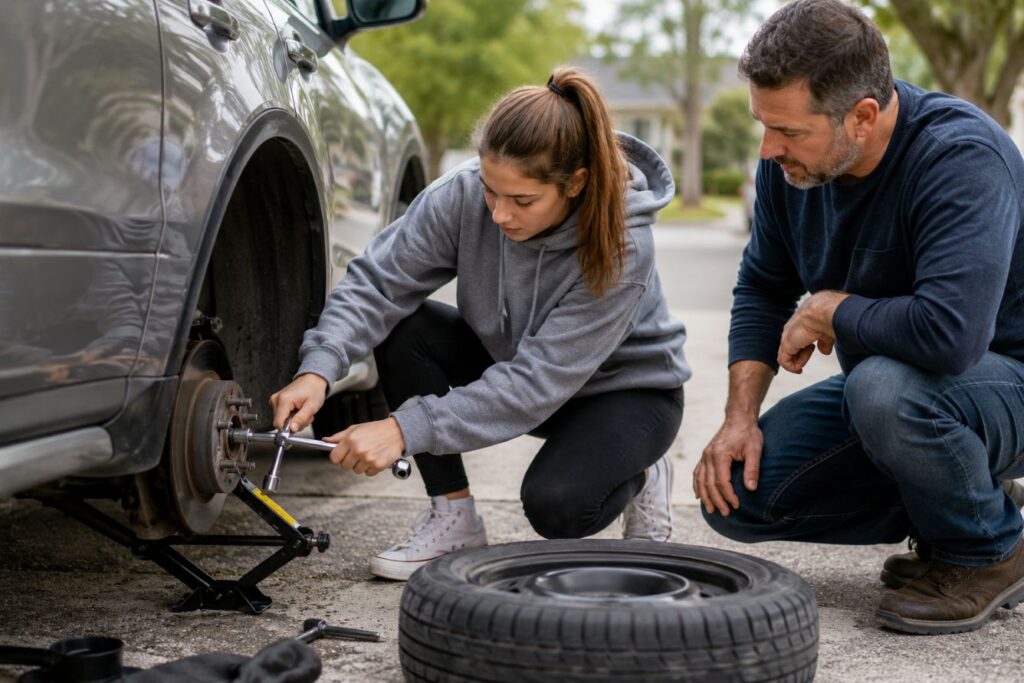
True independence means knowing how to handle everyday responsibilities, maintain the tools you rely on, and solve common problems without depending on someone else to rescue you.
11. Manage Transportation & Basic Vehicle Care
- ✅ Why This Skill Matters: Being stranded because of a flat tire, a dead battery, or an unread transit map stops daily life in its tracks. Basic vehicle literacy and navigation build true physical independence for teens.
- 🛠️ How to Get Started: If you drive, learn how to check tire pressure with a gauge, top off windshield washer fluid, read dashboard warning lights, and pump gas safely. If using transit, learn to navigate bus/train schedules and map apps without relying on direct rides.
- ⚠️ Common Mistakes: Driving on underinflated tires, ignoring a “Check Engine” light for months, and getting lost because your phone battery died without a backup charger.
- 📌 Try This This Week: Check the air pressure in all four tires of your vehicle (or a family car) using a digital tire gauge.
- 📚 Helpful Resource: Read your vehicle’s physical owner’s manual (found in the glove box) or use digital transit apps like Google Maps / Citymapper.
12. Solve Problems Before Asking for Rescue
- ✅ Why This Skill Matters: The single trait that separates independent young adults from dependent ones is resourcefulness. When faced with an unexpected obstacle, a teen’s first instinct should be to try troubleshooting before running to someone else to rescue them.
- 🛠️ How to Get Started: The next time something goes wrong, don’t immediately ask someone else to fix it. Try this simple five-step process first:
Pause. Take a breath instead of panicking.Think. Identify the exact problem.Research. Search Google, YouTube, or the instruction manual for possible solutions.Try. Test one or two safe, practical fixes.Ask. If you're still stuck, ask for help and explain what you've already tried.
- ⚠️ Common Mistakes: Giving up after the first setback, asking someone to fix a problem before spending 60 seconds researching it yourself, and blaming circumstances instead of taking ownership.
- 📌 Try This This Week: The next time a minor tech glitch or household issue happens (e.g., a printer won’t connect, a bike chain drops), spend 10 minutes troubleshooting it independently using search engines or tutorials before asking for assistance.
- 📚 Helpful Resource: How to Adult, A Practical Guide: Advice on Living, Loving, Working, and Spending Like a Grown-Up by Jamie Goldstein offers practical advice on becoming more independent, solving everyday problems, and navigating adult responsibilities with confidence.
Independence Category Takeaway: True independence isn’t doing everything completely alone—it’s having the confidence and resourcefulness to try before asking for help.
How Many of These Life Skills Have You Mastered?
Take a moment to self-evaluate where you stand today. Check off every skill you can handle completely unassisted:
- ☐ 1. Budgeting: I can create and manage a basic monthly budget.
- ☐ 2. Banking: I understand checking vs. savings and how credit works.
- ☐ 3. Professionalism: I can write a professional email and simple resume.
- ☐ 4. Interviewing: I can handle a basic job interview with confidence.
- ☐ 5. Cooking: I can cook at least five simple, healthy meals.
- ☐ 6. Laundry: I know how to wash, dry, and care for my clothes correctly.
- ☐ 7. Cleaning: I maintain a clean, organized living space regularly.
- ☐ 8. Healthcare: I can schedule my own medical appointments and manage prescriptions.
- ☐ 9. Emergencies: I know basic first aid and emergency household safety.
- ☐ 10. Communication: I handle stress and resolve disagreements respectfully.
- ☐ 11. Maintenance: I can navigate transportation and manage basic vehicle care.
- ☐ 12. Problem Solving: I troubleshoot problems independently before asking for help.
Start Here: If you checked fewer than four boxes, start with budgeting, cooking, and professional communication. Those three skills provide the strongest practical foundation for everything else.
Every teen starts somewhere. The goal isn’t to know everything today—it’s to keep adding skills that make tomorrow a little easier.

Frequently Asked Questions About Life Skills for Teens
What are the most important life skills for teens to learn first?
The most critical starting points are basic budgeting, simple cooking, professional communication, and self-directed problem-solving. Budgeting and cooking cover daily survival and financial health, while communication and problem-solving give teens the tools to handle almost any obstacle in school, work, or personal relationships.
At what age should teens start practicing these skills?
Life skills can be introduced gradually around ages 13–14 (middle school) with basic laundry, simple meal prep, and daily personal time management. As teens enter high school (ages 15–18), they should progressively take over scheduling appointments, managing personal money, handling job applications, and taking care of vehicle maintenance.
Why are practical life skills often missing from school curriculums?
School curriculums are primarily designed around academic standards, testing metrics, and specialized subject matter. Because instructional time is limited, practical daily skills are usually expected to be taught at home or through real-world experience. Combining academic learning with home practice provides the ideal balance.
What life skills are employers looking for in young adults?
Employers consistently look for “soft skills” rooted in personal responsibility: punctuality, clear communication, professional email etiquette, a willing attitude, and basic problem-solving ability. Showing up on time and following through on commitments will instantly set a teen apart in any workplace.
How can parents teach life skills without overwhelming their teen?
Focus on one skill at a time over a multi-week period instead of dumping a long list of expectations all at once. Demonstrate the skill together first, let the teen practice with supervision, and then step back completely to let them execute independently—including allowing them to make minor, low-stakes mistakes.
Where can teens practice these skills safely?
Start in low-stakes environments at home or in your local community. Practice cooking family dinners on weekends, manage a small summer or part-time job income, handle grocery trips with a strict budget, or take charge of scheduling personal haircuts and checkups.
You don’t need to master all twelve skills today. Pick one, practice it until it becomes routine, and then move on to the next. Small improvements made consistently create capable, confident adults.
Adulthood isn’t something that happens to you on your eighteenth birthday. It’s something you prepare for—one skill, one responsibility, and one good decision at a time.
Build the Habits That Make Independence Possible
Learning life skills isn’t about becoming perfect overnight—it’s about building small daily habits that make everyday responsibilities much easier to handle. If you’re ready to start building those routines, explore our 30-Day Discipline Reset Planner to begin tracking your habits effectively.
Coming Soon to “The Standard”:
Want a printable checklist version of these skills? I am currently creating the free “30 Life Skills Every Teen Should Learn Before Leaving Home” checklist. Join The Standard email newsletter today to be the first to receive it as soon as it drops!
If you’re ready to organize your personal growth and build lasting independence, explore the full collection of planners, journals, and habit trackers in the Caliber Motivation Co. shop today. They are built to help you turn discipline into lasting independence.
Join The Standard
Get practical articles on discipline, mindset, structure, and execution delivered straight to your inbox.
No hype. No fluff. Just real-world strategies to help you stay focused and keep building.
No spam. Unsubscribe anytime.